La Jolla Residential Modernism Tour
Additional registration fee required. Manage your registration to add.
La Jolla's collection of midcentury residences offers a rare look at how Southern California architects integrated structure, climate, and landscape, creating privately owned landmark homes shaped by the region's signature indoor-outdoor way of living.
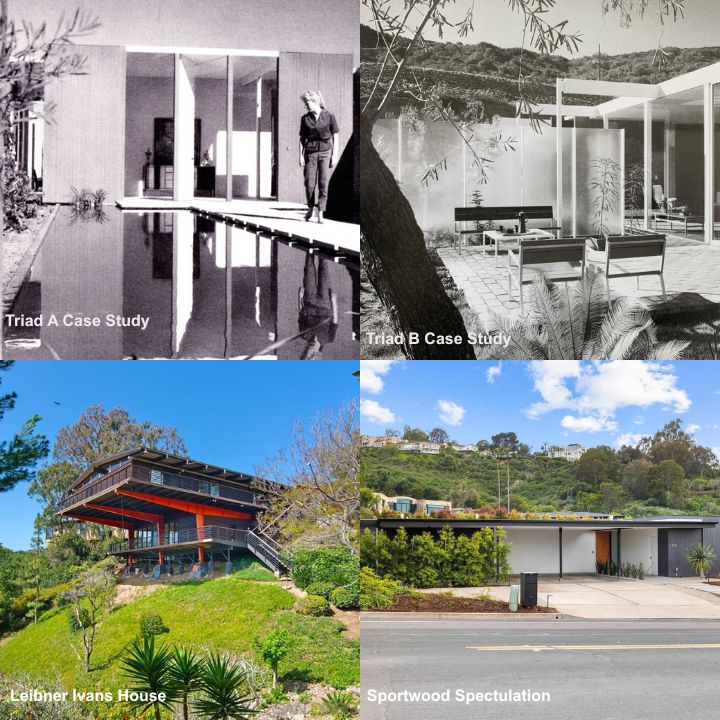
This program provides special access to several of these notable properties, beginning with Case Study House #23, Triad A & C (1961)-a significant example from the Case Study Program, which explored experimental, affordable, and replicable modern housing using postwar industrial materials and techniques.
Additional homes featured on the tour include:
- Swortwood Speculation House (1961) - Post-and-Beam style
- Leibner/Ivans House (1961) - built on a steep hillside with cantilevered steel supports
- Weber & Edwards House (1966) - Post-and-Beam residence sited on a dramatic slope
- Leibhart Residence (1951) - Organic Geometric design
Join us to explore how midcentury architects responded to site, climate, and lifestyle to create enduring residential designs that continue to influence the character of Southern California architecture.
Submitted for AIA CES approval.
Mode of Transportation: Bus
Learning Objectives
- Identify the key principles of the Case Study Program and explain how it shaped the development of modern residential architecture in Southern California.
- Explain how post‑and‑beam construction enabled larger glazing, open plans, and circulation patterns that supported emerging indoor–outdoor living.
- Evaluate the preservation strategies required to maintain midcentury landmark structures as building technologies and materials evolve.
- Analyze how orientation, siting, and topography influence natural light, ventilation, and overall environmental performance in midcentury residential design.
- Laura Conboy
- - Joan Gand
- - Keith York
- - Jeff Walker
-